GSA SER Link Lists
Understanding GSA SER Link Lists
Building a robust backlink profile is a cornerstone of modern search engine optimization, and automation tools have become essential for scaling these efforts. One of the most powerful, yet often misunderstood, assets for automated link building is the use of GSA SER link lists. These lists serve as the fuel for the software, directing it where to create accounts, submit content, and ultimately place your backlinks. Without a quality list, even the most finely tuned campaign settings will fail to deliver sustainable results.
What Exactly Are GSA SER Link Lists?
At their core, GSA SER link lists are curated collections of target URLs. These aren't just random website addresses; they are specifically identified platforms that GSA Search Engine Ranker can parse and interact with. The software uses these URLs to identify the registration page, the login form, and the submission area for various platform types, such as article directories, social networks, web 2.0 sites, and forum profiles. The list provides the starting point for the automated posting process.
The Anatomy of an Effective Link List
Not all lists are created equal. A high-performing list contains more than just a domain. It typically includes the precise engine type the software should use, and sometimes pre-verified registration fields. The goal is to minimize the number of failed submissions and account creations, which saves valuable resources and avoids IP blacklisting. A quality list is essentially a map that guides the software exactly where to go and what to expect when it arrives.
Why Quality Link Lists Are Non-Negotiable
Many users make the mistake of focusing solely on the volume of links while ignoring the quality of their target list. Using outdated or publicly scraped GSA SER link lists can be disastrous. These low-quality lists are often saturated, meaning every other marketer is spamming the same targets. Search engines easily identify and devalue these link neighborhoods. Worse, a high percentage of the URLs are dead, leading to a cascade of failed attempts that slow your campaign to a crawl.
Consequences of Using Poor Lists
- High failure rates: Up to 90% of a bad list might be dead on arrival.
- Increased footprint: Using the same public targets as everyone else leaves a detectable pattern.
- Wasted resources: Threads get tied up trying to post to non-existent platforms.
- IP reputation damage: Repeated failed login and posting attempts can get your proxies blacklisted quickly.
Types of GSA SER Link Lists
To master automated link building, you need to understand the different categories of lists available and how they apply to specific tiers in a linking structure. A strategic approach uses distinct lists for each level of your campaign to minimize risk and maximize link juice flow.
1. Verified Lists
These are the premium option. A verified list means that every URL inside it has already been successfully used to register an account and post at least one working read more link. This type of GSA SER link lists offers the highest success rate and minimal wasted action. The trade-off is that they are more expensive and constantly need updating as links get deleted and sites go offline.
2. Platform-Specific Lists
Instead of a mixed bag, these lists contain only one type of target, such as a list containing nothing but WordPress auto-approve comment sites, or a list dedicated to Drupal blogs. This granular control is perfect for building targeted tier-2 links that point to your tier-1 properties, matching the platform type for contextual relevance.
3. Site Lists (Unverified)
These are massive scraped lists of websites that potentially have the platform engine GSA SER can post to. They are the starting point for building your own verified lists. Running an unverified list requires significant time, strong proxies, and a powerful server to sift through the chaff, identifying the small fraction that actually allow successful submissions.
How to Source and Maintain Your Lists
Acquiring fresh, potent GSA SER link lists is a constant process. You cannot simply buy one pack and run it forever. The lifecycle of automated backlinks is short, with many being deleted by site admins or the platforms shutting down entirely. An active maintenance strategy is the only way to keep campaigns alive.
Building Your Own Private Lists
- Start with advanced footprints: Use custom search engine queries combined with scraping tools to find new, untouched platforms.
- Use a dedicated identification server: A separate GSA SER instance should be tasked only with identifying targets from scraped URLs. It will test posting capabilities without actually inserting your money-site links.
- Filter aggressively: After identification, run filters to check for obfuscated JavaScript, minimum word counts, and other anti-spam measures that will trip up the poster.
- Export only verified: Transfer the successfully verified URLs into the lists used by your live posting campaigns.
Buying Premium Verified Lists
For those without the time or server infrastructure, subscribing to a service that provides daily updated GSA SER link lists is highly effective. Look for providers that offer niche-specific lists and have a track record of low dead-link percentages. A fresh list delivered every 24-48 hours can keep a campaign running at high velocity without the overhead of massive identification runs.
Integrating Lists into Your Campaign Strategy
Simply loading a list and hitting start is a recipe for a penalty. The lists must be aligned with your overall SEO tier structure. Your best, most contextually relevant verified lists should be reserved for your tier-1 properties—the web 2.0s and high-quality article sites that link directly to your money page. Lower-quality unverified lists are better suited for creating a massive base of tier-3 links pointing to those tier-1 buffers.
Optimizing Configuration for List Usage
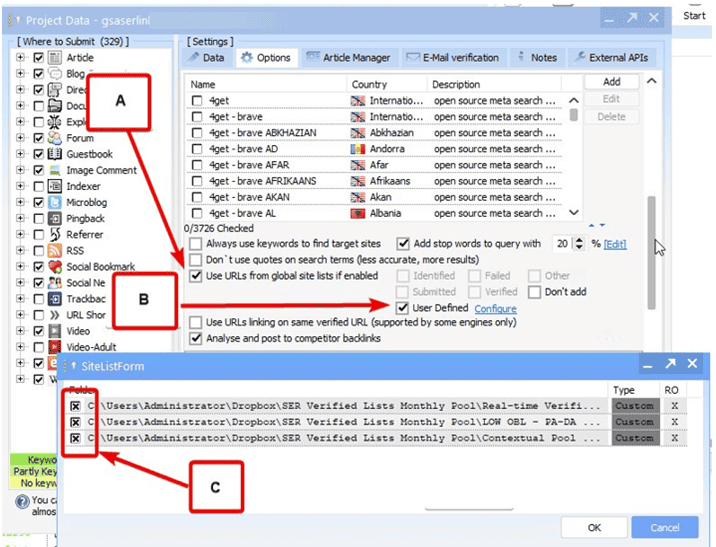
When working with GSA SER link lists, you must adjust your project options to match the list's quality. For highly verified lists, you can lower the number of retries and tighten the thread count since every submission is likely to go through. For raw unverified lists, you need more threads, a larger pool of rotating proxies, and higher retry limits to compensate for the massive expected failure rate.
Frequently Asked Questions
What is the primary function of a GSA SER link list?
A link list provides the software with the specific URL targets it needs to automate the account creation and content submission process. It tells GSA SER where to build backlinks by specifying the platform's domain and the appropriate engine to use.
How often should I refresh my GSA SER link lists?
This depends on the intensity of your campaign, but for verified lists, a refresh every 24 to 72 hours is standard. Links can disappear quickly, and a list's success rate drops dramatically if not maintained. Unverified source lists can be used until they stop producing new verified targets.
Can I use the same list for multiple campaigns?
Technically yes, but it creates an overlapping footprint. If the same domain posts to the same targets for multiple money sites, it links the two projects together. For clean link profiles, it is safer to use unique lists for different niches or to randomize target selection from a much larger pool.
Why are custom footprints important for creating my own lists?
Custom footprints allow you to find platforms that are not yet indexed by public scraping tools. This gives you first-mover advantage and targets that are not yet saturated with spam, resulting in a much higher link survival rate and a unique backlink profile that competitors cannot easily replicate.
What is the difference between "identified" and "verified" in a list?
An identified target is a URL that GSA SER has recognized as a platform it can theoretically post to based on its engine. A verified target has gone one step further: the software has successfully registered an account and placed a test post, confirming the link is live and passes the site's filtering rules.